

When your appetite suddenly shrinks, working out what to eat on weight loss injections can feel surprisingly tricky. Meals that once felt normal may seem far too big, favourite foods might not sit as well as they used to, and it is easy to fall into the habit of barely eating at all. Yet what goes on your plate has a big influence on how well you feel, how you manage side effects and how much of your progress you keep in the long run.
We support patients throughout their weight management journey, including practical advice on food, portions and routines that fit real life. If you would like tailored guidance, contact us, call our team or book a consultation.
This guide explains which foods to focus on, which ones to limit, and how to build simple meals that work alongside your treatment.
Quick Answer
On weight loss injections, aim for small, regular meals built around lean protein, vegetables, fruit and wholegrain fibre, with plenty of fluids sipped through the day. Limit greasy, fried and very sugary foods, which often worsen nausea and indigestion. Try not to skip meals completely, as eating too little can leave you tired, increase muscle loss and make side effects harder to manage.
Why Food Still Matters on Weight Loss Injections
Medicines such as Mounjaro and Wegovy reduce appetite and slow digestion, so you will naturally eat less. That makes every meal count for more. When portions shrink, the quality of your food becomes even more important.
Eating well during treatment helps you:
- Protect muscle while you lose fat
- Reduce side effects such as nausea, bloating and constipation
- Keep your energy levels steady through the day
- Get enough vitamins, minerals and fibre from smaller amounts of food
- Build habits that help you maintain your results if you stop treatment
If you are new to medicated weight loss, our complete guide to weight loss injections in London covers how these treatments work, who they suit and how Mounjaro and Wegovy compare.
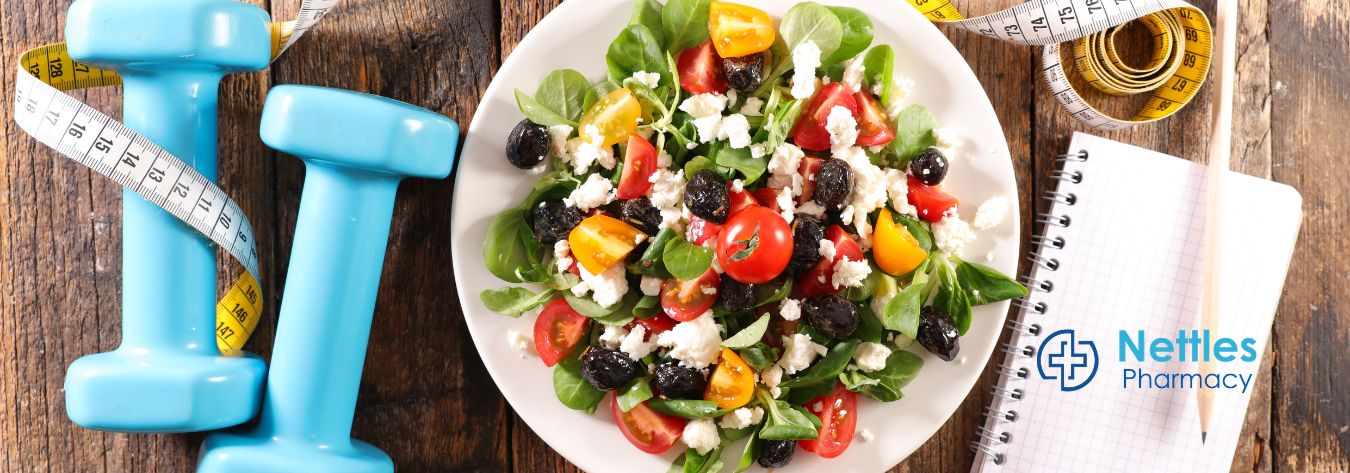
How to Build a Balanced Plate
You do not need a complicated diet plan. The NHS Eatwell Guide is a helpful starting point, and it adapts well to the smaller portions you will likely be eating on treatment.
When putting a meal together, try this simple order of priority:
- Start with protein. Make it the first thing you put on your plate and the first thing you eat, so you still get enough if you fill up quickly.
- Add vegetables or salad. These bring fibre, vitamins and volume without many calories.
- Include a small portion of starchy carbohydrate. Wholegrain options such as brown rice, oats, wholemeal bread or potatoes with skins provide energy and fibre.
- Finish with a little healthy fat. A drizzle of olive oil, a few nuts or some avocado is plenty.
Using a smaller plate or bowl can help, as a full-size portion may look manageable but feel overwhelming halfway through.
Why Protein Deserves Extra Attention
When you lose weight, some of what you lose can be muscle, especially if you eat very little. Protein helps your body hold on to muscle, keeps you feeling satisfied and supports healthy skin, hair and immunity.
Easy ways to include protein throughout the day:
- Eggs at breakfast, whether boiled, scrambled or in an omelette
- Greek yoghurt or skyr with fruit as a snack
- Chicken, turkey or fish with lunch and dinner
- Beans, lentils, chickpeas or tofu in soups, stews and salads
- Cottage cheese on crackers or oatcakes
- Protein shakes on days when solid food feels difficult
Foods to Focus On and Foods to Limit
No food needs to be banned forever, but some choices tend to sit better than others while you are on treatment.
| Food Group | Focus On | Limit |
|---|---|---|
| Protein | Eggs, chicken, fish, tofu, beans, lentils, Greek yoghurt | Fried, battered or processed meats |
| Carbohydrates | Oats, brown rice, wholemeal bread, potatoes with skins | Pastries, white bread in large amounts, sugary cereals |
| Fruit and vegetables | Berries, bananas, apples, leafy greens, carrots, courgettes | Large portions of very gassy vegetables if you feel bloated |
| Fats | Olive oil, nuts, seeds, avocado in small amounts | Fried food, creamy sauces, takeaways |
| Drinks | Water, herbal tea, sugar-free squash, milk | Alcohol, fizzy drinks, sugary coffees and smoothies |
A Simple Day of Eating
Every person’s needs are different, but this example shows how a balanced day might look on weight loss injections:
- Breakfast: Scrambled eggs on one slice of wholemeal toast, or porridge made with milk and topped with berries
- Mid-morning: A small pot of Greek yoghurt
- Lunch: Lentil and vegetable soup with a small wholemeal roll, or a chicken salad with new potatoes
- Afternoon: An apple with a small handful of nuts, or cottage cheese on oatcakes
- Dinner: Baked salmon or tofu with roasted vegetables and a small portion of brown rice
- Drinks: Water sipped steadily through the day, with herbal tea if you enjoy it
If this feels like too much food, that is fine. Keep the protein and vegetables and reduce the carbohydrate portion first. If you find you can only manage a few mouthfuls at each meal, speak to us so we can review your plan.
Eating to Reduce Side Effects
The way you eat can make a big difference to common side effects, especially in the early weeks and after a dose increase. Many patients notice that rich meals trigger nausea, while large portions leave them feeling uncomfortably full.
These habits can help:
- Eat slowly and put your fork down between mouthfuls
- Stop as soon as you feel comfortably satisfied, not full
- Choose plain foods such as toast, crackers, rice or soup when nausea flares
- Avoid lying down for 30 to 60 minutes after eating
- Increase fibre gradually to help prevent constipation without causing bloating
- Eat lighter meals on the day after your injection if that is when you feel worst
Your appetite often changes most around dose increases. Our guides on why your Mounjaro dose increases gradually and Wegovy dosing explain what to expect at each stage, so you can plan lighter meals when you need them.
The Risks of Eating Too Little
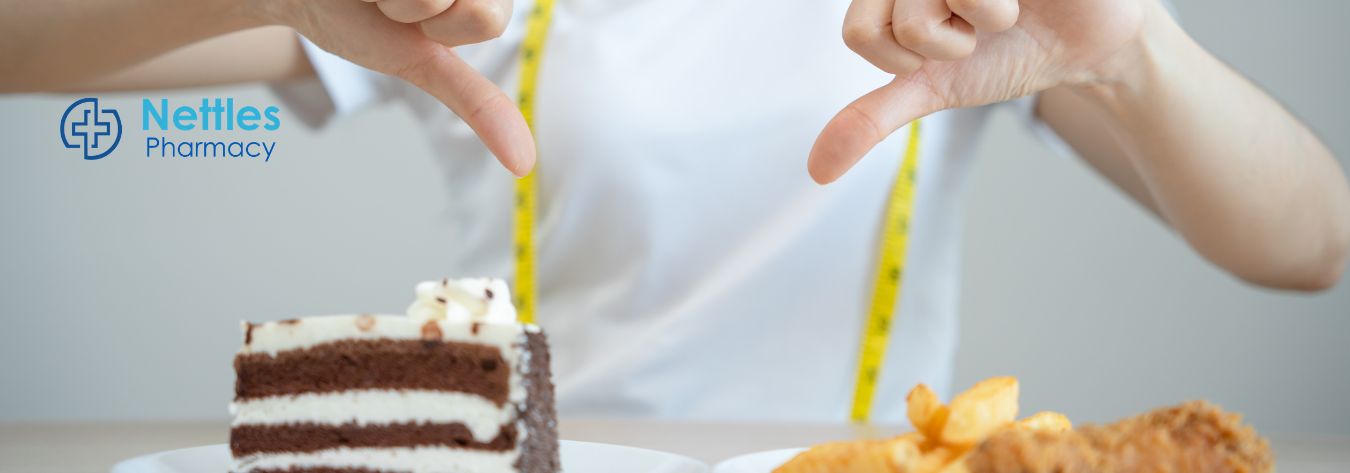
With a reduced appetite, it can be tempting to skip meals altogether. This often backfires. Eating very little, or losing weight very quickly, can lead to:
- Tiredness, dizziness and poor concentration
- Greater loss of muscle
- A higher risk of gallstones
- Low intake of important nutrients such as iron, calcium and B vitamins
- Hair thinning in some people
If you take insulin or sulfonylureas for diabetes, skipping meals can also increase the risk of low blood sugar. Let your prescriber know if you are eating much less than usual.
Easy Protein Swaps and Sources
Knowing roughly how much protein is in everyday foods makes it easier to plan meals. The figures below are approximate and vary between brands and cooking methods.
| Food | Typical Portion | Protein (approx.) |
|---|---|---|
| Large egg | 1 egg | 6 to 7 g |
| Cooked chicken breast | 100 g | About 30 g |
| Tinned tuna (drained) | 100 g | About 25 g |
| Greek style yoghurt (fat free) | 150 g pot | About 15 g |
| Cottage cheese | 100 g | About 11 g |
| Firm tofu | 100 g | About 12 g |
| Cooked lentils | 100 g | About 9 g |
Simple swaps can raise your protein without making meals bigger. For example, you could swap a sugary cereal for porridge with Greek yoghurt, or add beans to a soup.
Hydration, Alcohol and Drinks
Because weight loss injections reduce hunger, they can also reduce thirst. Dehydration can make nausea, headaches and constipation worse.
- Keep a water bottle with you and sip regularly
- Drink between meals rather than with large amounts of food
- Try cold water, herbal tea or sugar-free squash if plain water feels hard
- Limit alcohol, as it adds calories and can worsen nausea and dehydration
- Watch out for high calorie coffees, milkshakes and smoothies
If you are vomiting, have diarrhoea or cannot keep fluids down, seek medical advice promptly.
Hints and Tips
- Batch cook soups and stews so a healthy meal is always ready
- Keep easy protein snacks in the fridge, such as yoghurt and boiled eggs
- Eat protein first at every meal
- Note which foods trigger side effects so you can adjust
- Pair good food with strength exercises twice a week to protect muscle
FAQs About Eating on Weight Loss Injections
Do I need to follow a special diet on weight loss injections?
No strict diet is required. A balanced approach based on the NHS Eatwell Guide, with smaller portions and a focus on protein, fibre and vegetables, works well for most people. The aim is to build sustainable habits rather than follow restrictive rules.
What should I eat if I feel sick?
Plain, bland foods such as toast, crackers, bananas, rice and clear soups are usually easiest to tolerate. Eat small amounts slowly and sip fluids between meals. If nausea is severe or you cannot keep fluids down, contact a healthcare professional.
Is it okay to skip meals if I am not hungry?
Regularly skipping meals is not recommended. Even when your appetite is low, small, regular meals help you get enough nutrients, protect muscle and keep your energy steady. A light snack is better than nothing.
Can I still eat my favourite foods?
Yes, in moderation. Many people find rich or greasy foods less appealing on treatment, and reducing them around dose increases can ease side effects. Enjoying a smaller portion of something you love can help you stay consistent over time.
Should I take vitamins while on treatment?
A varied diet is the best source of nutrients, but some people who eat much less may benefit from a general multivitamin. Everyone in the UK is advised to consider vitamin D in autumn and winter. Speak to us before starting supplements, especially if you take other medicines.
Please Note
This blog is a general guide and does not replace personalised medical or dietary advice. Please visit us in store or get in touch for guidance tailored to you.
Eat Well and Stay on Track in London
Knowing what to eat on weight loss injections helps you feel better, manage side effects and protect your progress. Focus on protein, vegetables and fibre, keep portions small and regular, and stay well hydrated. Small, consistent choices add up to lasting results.
If you would like personal support with your meals or your treatment plan, contact us or book an appointment with our friendly team in London.
